
- Admin
- No Comments
- February 5, 2026
Workplace safety training is essential in high-risk industries such as construction, manufacturing, warehousing, and general industry. If your job requires OSHA safety training, you’ve likely heard about OSHA 10 and OSHA 30. While both courses fall under OSHA’s Outreach Training Program, they serve different purposes and audiences.
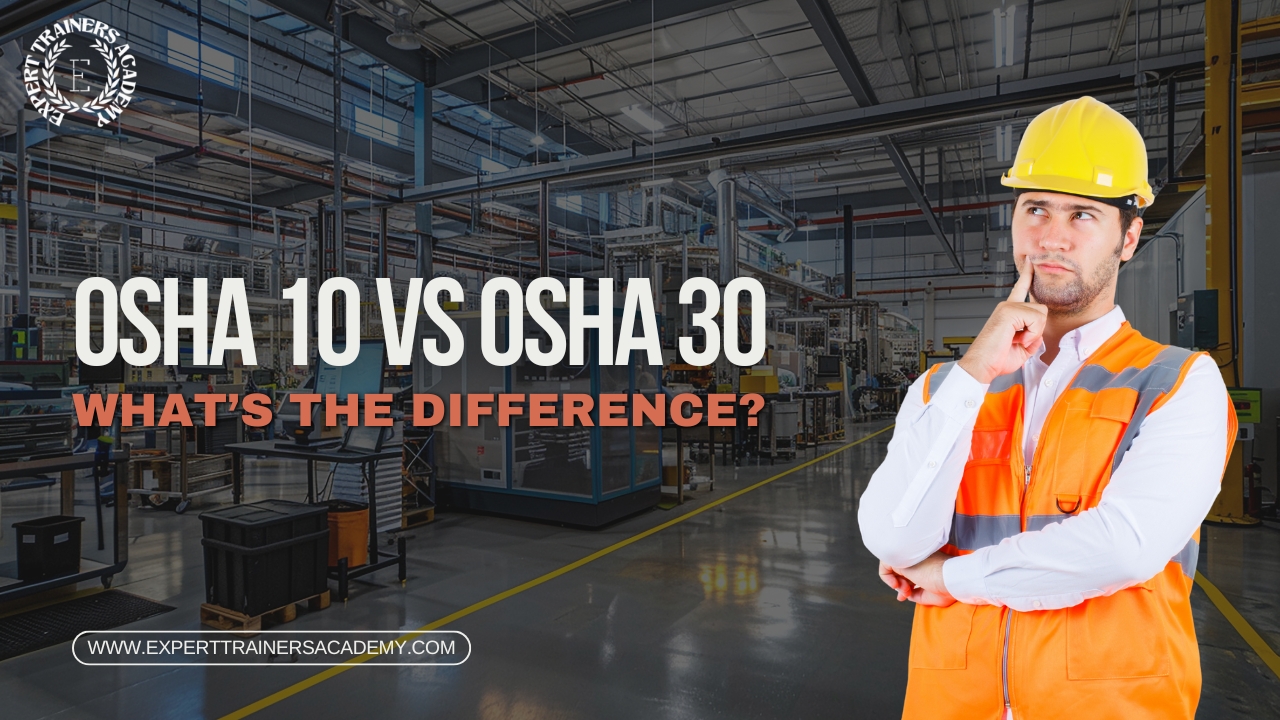
This guide explains OSHA 10 vs OSHA 30 in detail, including who each course is for, what they cover, how long they last, and whether you need both.
What Is OSHA Training?
OSHA stands for the Occupational Safety and Health Administration, a federal agency under the U.S. Department of Labor. OSHA created the Outreach Training Program to provide standardized safety education for workers and supervisors.
These courses are designed to:
- Increase hazard awareness
- Reduce workplace injuries and accidents
- Help employers meet job-site safety requirements
The Outreach program is divided into two levels:
- OSHA 10-Hour Training
- OSHA 30-Hour Training
Each level is available for different industries, including Construction and General Industry.
You Can Also Read: Integrated Management System ISO 9001 ISO 14001 ISO 45001
What Is OSHA 10?
OSHA 10 is an entry-level safety training course designed for workers with no supervisory responsibilities.
Key Features of OSHA 10
- Training Duration: 10 hours
- Target Audience: Entry-level workers and laborers
- Purpose: Basic safety awareness
- Industry Options: Construction or General Industry
What OSHA 10 Covers
OSHA 30 is an advanced safety training course intended for supervisors, managers, and safety professionals.
What Is OSHA 30?
An effective IMS includes several core components:
Key Features of OSHA 30
- Training Duration: 30 hours
- Target Audience: Supervisors and leadership roles
- Purpose: Safety management and hazard prevention
- Industry Options: Construction or General Industry
What OSHA 30 Covers
OSHA 30 includes all OSHA 10 topics, plus advanced subjects such as:
- Managing safety and health programs
- Job hazard analysis
- Accident investigation
- Emergency action planning
- Fire prevention
- Ergonomics
- Confined spaces
- OSHA standards and compliance basics
OSHA 30 prepares supervisors to manage safety programs and enforce safety policies across job sites.
OSHA 10 vs OSHA 30: Key Differences
| Feature | OSHA 10 | OSHA 30 |
|---|---|---|
| Course Length | 10 hours | 30 hours |
| Training Level | Basic | Advanced |
| Designed For | Workers | Supervisors & managers |
| Focus | Hazard awareness | Safety management |
| Curriculum Depth | Introductory | Comprehensive |
| Covers OSHA 10 Topics | No | Yes |
Who Needs OSHA 10 vs OSHA 30?
You Should Take OSHA 10 If:
- You are a worker or laborer
- You do not supervise others
- You need basic safety training
- Your employer or job site requires OSHA awareness
You Should Take OSHA 30 If:
- You supervise workers
- You manage job-site safety
- You are a foreman, site lead, or safety officer
- Your role involves enforcing safety rules
Some states and job sites may require OSHA 30 even for non-supervisory roles, so it’s important to verify local requirements.
Is OSHA 10 Required Before OSHA 30
No. OSHA 10 is not a prerequisite for OSHA 30.
You can enroll directly in OSHA 30 if your job requires supervisor-level training, even if you have never taken OSHA 10.
Does OSHA 30 Cover OSHA 10?
Yes. OSHA 30 fully covers OSHA 10 content and expands on it in greater detail. This is why workers who have completed OSHA 30 generally do not need OSHA 10.
If You Have OSHA 30, Do You Need OSHA 10?
In most cases, no. OSHA 30 is widely accepted as a replacement for OSHA 10. Some states or employers specifically mention OSHA 10, but they usually accept OSHA 30 as an equivalent or higher qualification.
Do You Ever Need Both OSHA 10 and OSHA 30?
You do not need to take both at the same time. However:
- A worker may take OSHA 10 early in their career
- Later, they may need OSHA 30 after moving into a supervisory role
OSHA 10 training does not transfer hours toward OSHA 30. If required, the full OSHA 30 course must be completed.
Is the OSHA Certificate Different From the OSHA Card?
Yes, they are different.
- OSHA Certificate: Issued by the training provider as proof of course completion
- OSHA DOL Card: A wallet-sized card issued by the U.S. Department of Labor
Most employers require the OSHA DOL card, as it is the official credential.
How Long Is OSHA 10 or OSHA 30 Good For?
OSHA 10 and OSHA 30 do not officially expire. However:
- Employers may require refresher training
- Some states require renewal every 3 to 5 years
- Job sites may set their own validity rules
Always confirm local and employer requirements.
Benefits of OSHA 10 and OSHA 30 Training
Benefits for Workers
- Increased safety awareness
- Reduced risk of injuries
- Improved job performance
- Better employment opportunities
Benefits for Employers
- Fewer accidents and incidents
- Improved OSHA compliance
- Stronger safety culture
- Reduced insurance and liability costs
How Do You Pass OSHA 10 or OSHA 30?
To complete OSHA training, participants must:
- Complete all required training hours
- Attend or complete all course modules
- Pass quizzes or exams if required by the provider
While OSHA does not mandate testing, many providers require a minimum passing score.
You Can Also Read: Roles and Responsibilities of a Safety Officer
Expert Trainer Academy – Learn OSHA 10 & OSHA 30 from Industry Professionals
Enrolling in OSHA 10 or OSHA 30 courses through a trusted Expert Trainers Academy ensures you receive high-quality instruction from experienced safety professionals. These academies provide:
- Certified instructors with real-world industry experience
- Hands-on training and practical exercises
- Flexible schedules, including online and in-person options
- Updated course materials that align with current OSHA standards
- Guidance on certification and DOL card issuance
Choosing a reputable academy not only helps you complete your OSHA training efficiently but also enhances your understanding of workplace safety, making you a valuable asset to any employer.
Ready to Advance Your Safety Career?
Enroll today with our Expert Trainers Academy and get certified in OSHA 10 or OSHA 30 with guidance from experienced instructors. Secure your spot now and boost your workplace safety skills!
Final Thoughts
The difference between OSHA 10 vs OSHA 30 comes down to responsibility and depth of training. OSHA 10 is ideal for workers who need basic safety awareness, while OSHA 30 is designed for supervisors who manage safety programs and teams.
Choosing the correct course helps ensure compliance, improves workplace safety, and supports long-term career growth.